




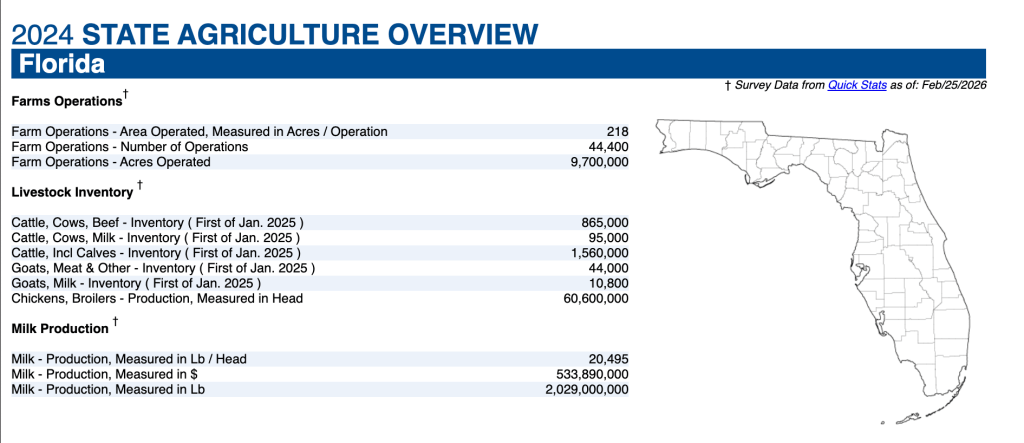
Florida is traditionally the “winter garden” of the United States, providing the vast majority of the nation’s fresh tomatoes, peppers, citrus, and sweet corn during the first quarter of the year. However, February 2026 has brought a “perfect storm” of environmental disasters that have effectively halted the flow of produce out of the region.
- Back-to-back freeze events destroyed tender crops, causing catastrophic losses across peppers, tomatoes, strawberries, and sweet corn.
- Hurricane-driven saltwater intrusion raised soil salinity, rendering thousands of acres unproductive for the 2026 season.
- Florida shortfall shifted reefer demand to Mexican border and Southern states, straining equipment and lengthening trips.
- Dispatchers must reposition fleets, demand deadhead pay, and build new broker relationships to survive the disrupted season.
1. The “Ezra and Gianna” Freeze Events
Just as the spring planting season was reaching its peak, two back-to-back winter storms, Ezra and Gianna, dipped further south than meteorologists predicted. Temperatures in Central and South Florida plummeted below freezing for consecutive nights. While “citrus is hardy,” the tender blooms of bell peppers and tomatoes were decimated.
- Sweet Corn: Reported 100% loss in many areas.
- Strawberries: Over $306 million in damages.
- Tomatoes: Estimated 80% loss of the remaining season’s harvest.
2. Soil Salinity and the Hurricane Hangover
The residual effects of the high-intensity hurricane season of late 2025 are finally coming to a head. Massive storm surges pushed saltwater miles inland, flooding low-lying agricultural fields. While the water receded, the salt remained. Farmers are finding that their current crops are “stunting”—the plants fail to produce fruit of a marketable size. This “salinity poisoning” has rendered thousands of acres of formerly prime land unusable for the 2026 season.
The “Produce Gap” and the Supply Chain Ripple Effect
The loss of Florida’s harvest creates a massive “Produce Gap” in the Eastern United States. Normally, this time of year sees a heavy flow of refrigerated (reefer) freight moving up I-95 and I-75.
Impact on Logistics and Freight Rates:
- The Lane Shift: With Florida’s volume down significantly, brokers are desperately shifting their focus to the Mexican border (Pharr and Nogales) to fill the void.
- Reefer Scarcity: Because the hauls from the Mexican border to the Northeast are significantly longer than from Florida, trucks are “tied up” on the road for more days.
- The “Empty Backhaul” Problem: Carriers that traditionally took dry goods down to Florida and “loaded out” with produce are now finding themselves “deadheading” hundreds of miles out of the state to Georgia or South Carolina just to find a paying load.
Reefer Lane Forecast: Positioning for the Mexican Border Surge
With Florida’s production stalled, the “center of gravity” for produce has shifted to the Southern Border. If you want to keep your reefer units moving at premium rates, you must reposition to capture the 2026 Mexican import surge.
| Port of Entry | Primary Commodities (March 2026) | Trend Status | Strategy for Dispatchers |
| Pharr, TX | Avocados, Tomatoes, Berries | SURGE | Texas has surpassed California in reefer demand. Target loads heading to the Midwest/East Coast. |
| Nogales, AZ | Squash, Cucumbers, Grapes | MODERATE | While volume is slightly down vs. Texas, Nogales remains the primary hub for West Coast supply. |
| Laredo, TX | Mixed Produce, Processed Goods | STABLE | High demand for “cross-dock” loads. Best spot for quick turnarounds and regional reloads. |
| McAllen, TX | Leafy Greens, Tropical Fruits | SURGE | High competition; ensure your “Clean Truck” credentials are ready for fast border processing. |
Broker Negotiation Script: Demanding Deadhead Pay
When hauling into Florida during a crop failure, the “loaded mile” is only half the story. You must negotiate for the “round trip” or “deadhead out” because the traditional reloads simply do not exist. Use this script to secure the rates your fleet needs to survive.
Dispatcher: “I see you have that load of frozen poultry going into Miami. What’s the rate on that?”
Broker: “We’re looking at $2.10 per mile. It’s a straight shot down I-95.”
Dispatcher: “I can’t do it for $2.10. According to the latest February 24th agricultural report, Florida just lost over $3.1 billion in crops. There is no produce coming out of Immokalee or Belle Glade right now. My driver is going to have to deadhead at least 450 miles up to Savannah or Tifton just to find a reload. I need $2.95 per mile to cover the inbound and the fuel for that empty exit.”
Broker: “I can’t go that high. The market rate is lower.”
Dispatcher: “The market rate yesterday doesn’t reflect the 80% loss in strawberries and 100% loss in sweet corn today. If you want a reliable reefer unit to take that load into a ‘dead zone,’ you have to pay for the deadhead out. Otherwise, that truck is heading to Pharr, Texas, where the produce surge is actually happening.”
Survival Strategy for Dispatchers and Carriers
In a year of produce losses, the “Florida Run” is no longer a guaranteed paycheck. Independent dispatchers must adapt:
- Diversify Your Regional Focus: Stop looking for “Florida outbound.” Reposition your fleet to South Texas or Southern Arizona. The volume that usually comes out of Homestead is currently crossing the Rio Grande.
- Audit Your Drivers: With Florida’s increased ELP (English Language Proficiency) and immigration checkpoints at weigh stations, ensure your drivers are 100% compliant before entering the state, as inspections have intensified following the crop failures.
- Monitor the Georgia “Spring Flush”: As Florida fails, retailers will lean harder on Southern Georgia. Start building relationships with brokers in Tifton and Vidalia now to catch the earlier-than-usual rush.
Conclusion: A Year of Resilience
The Florida produce losses of 2026 are a stark reminder of the trucking industry’s dependence on the weather. While the “Sunshine State” works to recover from a $3.17 billion hit, the rest of the supply chain must pivot. For the dispatcher, this is a year of “Data over Tradition.” Success requires moving your assets to where the harvest is—even if that means leaving the Sunshine State in the rearview mirror for now.


