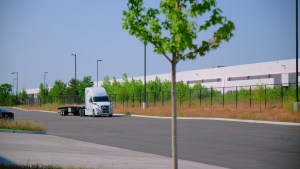
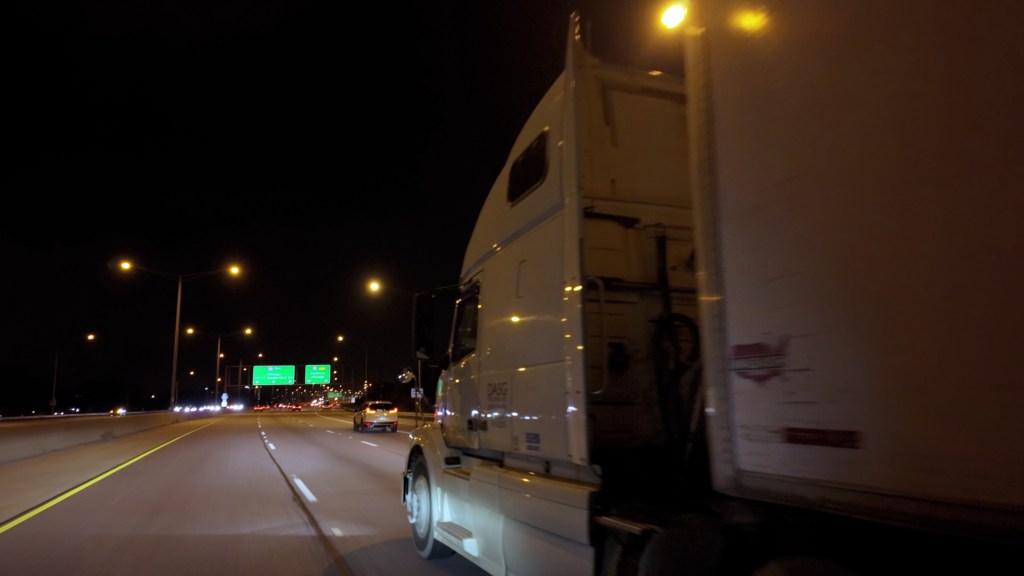
While battery-electric Class 8 captures the majority of the zero-emission trucking conversation, Hyundai’s XCIENT Fuel Cell hydrogen Class 8 has quietly accumulated roughly 1.6 million operational kilometers across 63 North American trucks since 2023 — and the deployment is structurally different from electric in ways that matter for independent carriers running long-haul out of California. The flagship 30-truck NorCAL ZERO project at the Port of Oakland is the largest hydrogen-truck deployment in North America, backed by $22 million in California Air Resources Board and California Energy Commission grants plus $7 million from the Alameda County Transportation Commission and the Bay Area Air Quality Management District.
Where Hydrogen Class 8 Actually Fits
Hydrogen fuel cell trucks solve two problems battery-electric struggles with: range and refueling time. The XCIENT’s on-paper range sits in the 400–500 mile band on a single fueling, and the refueling event takes roughly 15–20 minutes — closer to a diesel pit stop than to the 30 minutes a Tesla Megacharger needs to refill 60 percent of a Semi’s pack. The trade-off is hydrogen fuel cost (commonly $8–$13 per kilogram at California stations), the limited fueling network, and the higher up-front capex per unit before subsidy. Green Car Reports’ coverage of the 500-mile California pilot notes that Hyundai is positioning the platform specifically for drayage and regional long-haul where range is the limiting factor for battery-electric.

The NorCAL ZERO Numbers Independent Dispatchers Should Read Closely
NorCAL ZERO is the cleanest data point in North American hydrogen Class 8 because it is operating at scale. The consortium is led by the Center for Transportation and the Environment with Hyundai Motor as the OEM, and the trucks pull drayage out of the Ports of Oakland into the wider Bay Area distribution network. Per the Hyundai Motor Group press release, the global XCIENT fleet (including the European deployment) has now passed 20 million kilometers cumulative — a milestone that takes hydrogen Class 8 out of the “test program” bucket into the “operational fleet” bucket for purposes of TCO modeling.
In North America, a total of 63 XCIENT Fuel Cell trucks are currently in operation, collectively surpassing approximately 1.6 million kilometers of accumulated driving since their regional debut in 2023.
Heavy Duty Trucking on Hyundai’s California deployment
The TCO and Voucher Stack
The economics of hydrogen Class 8 only work today with the voucher stack. Independent carriers running California-only or California-Pacific Northwest lanes can pair federal tax credits under the Inflation Reduction Act’s Section 45W (up to $40,000 per qualifying commercial clean vehicle) with state-level vouchers under HVIP and CARB-administered grant programs. The Southern California Pilot deployment Hyundai announced received a $500,000 grant from the South Coast Air Quality Management District for two Class 8 demonstration units. Outside of the voucher-rich California corridor, the math gets harder; that is the structural reason hydrogen Class 8 has clustered around the Ports of Oakland and Long Beach rather than spreading nationally.
- Range: 400–500 miles per fueling on the new XCIENT — competitive with diesel, well above current battery-electric Class 8.
- Refuel time: 15–20 minutes — faster than a Tesla Megacharger session and aligned with diesel-stop economics.
- Hydrogen fuel network: Highly concentrated in California; the Bay Area, LA basin, and a handful of Inland Empire stations are the operational geography.
- Voucher stack: Federal Section 45W up to $40,000 plus state HVIP and CARB grants — per-truck stack can exceed $250,000 in California.
- Operational use case: Drayage, regional long-haul, port-to-DC lanes — not yet a national over-the-road platform.
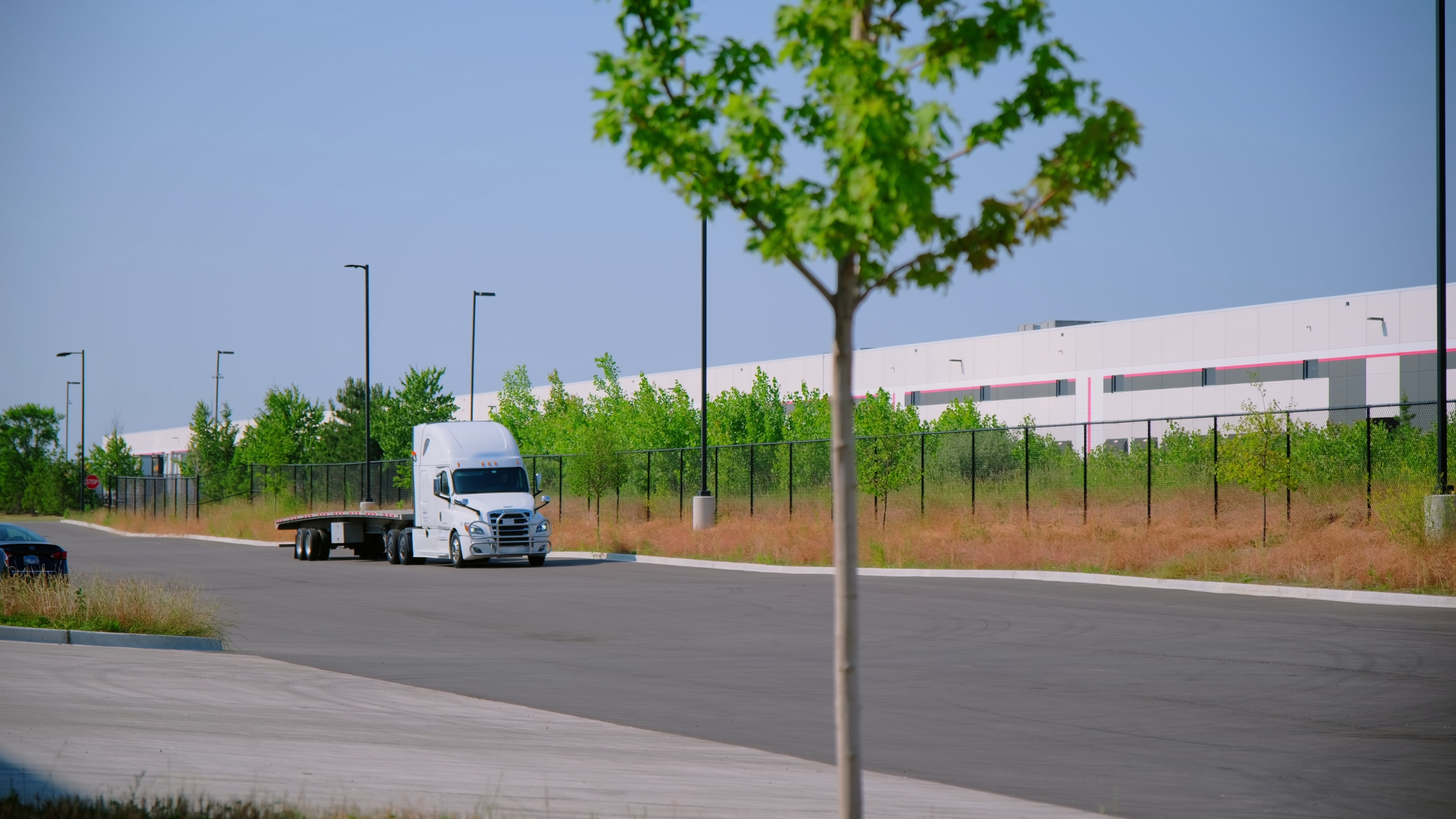
How XCIENT Fits Against Tesla Semi and Daimler eCascadia
The competitive frame matters. Tesla Semi has just begun high-volume production at Gigafactory Nevada with first units rolling off the line in late April 2026 and the first customer Megacharger station opening in Ontario, California. Daimler’s Freightliner eCascadia is now into the 800-unit Sysco rollout. XCIENT is running parallel to both with a fundamentally different chemistry — hydrogen fuel cell instead of lithium-ion battery — which means the long-term competitive question is not which OEM wins, but which propulsion technology fits which lane. Independent dispatchers running California drayage should evaluate XCIENT alongside the eCascadia and Tesla Semi rather than as a separate exotic option.

What to Watch the Rest of 2026
The decision points that matter for independent carriers in the next nine months: whether the new XCIENT fuel cell system upgrade announced in 2025 lifts duty-cycle range above the current 500-mile band; whether CARB renews HVIP voucher funding through 2027; whether Shell, FirstElement, and Iwatani add hydrogen Class 8 capacity at any U.S. station outside California; and whether Hyundai expands the Hyundai Motor Group U.S. commercialized XCIENT tractor deployment beyond the existing 63-truck operational fleet. These are the structural levers that determine whether hydrogen Class 8 stays a California-only proposition or becomes a credible national long-haul propulsion option by 2027.