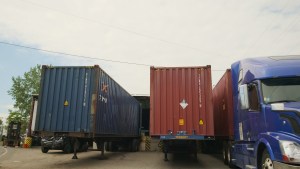

A Utah Fourth District Court jury handed down an $81 million verdict against building-products distributor Beacon (formerly Allied Building Products) in the Madsen family wrongful-death case — the largest civil verdict ever returned in Utah history and one of the largest trucking nuclear verdicts of the past 12 months. Per FreightWaves’ report on the Madsen verdict, the case stems from the death of 12-year-old Michael Madsen, struck by an Allied Building Products day cab pulling a flatbed trailer while crossing the road in a marked crosswalk with a Walk signal in his favor. The driver, Rusty Cope, did not come to a full stop before making a right turn into the intersection. The verdict also included $7.5 million in awards to Michael Madsen’s two friends who witnessed the incident.
The Case Profile and the Confidential Settlement That Followed
The verdict came down in a retrial in Utah’s Fourth District Court, with Beacon Building Products listed as the defendant of record. After the jury returned the $81 million figure, both sides reached a settlement at a confidential dollar amount that Yahoo Finance’s reposting of the FreightWaves story notes supersedes the publicly returned verdict. The settlement structure means the $81 million number is the negotiating ceiling rather than the cash transfer, but the verdict itself is now part of the record that future plaintiffs’ counsel will cite when modeling case value.
Why the Madsen Verdict Matters Beyond Beacon
Nuclear verdicts — commonly defined as awards above $10 million — have been climbing in both frequency and severity for several years. Marsh McLennan Agency’s research on the trend documents that average nuclear verdict size grew 27 percent between 2020 and 2024, with the headline numbers compounding even faster. The 2021 $1 billion Florida verdict against AJD Business Services, the multiple $200–$500 million awards in 2022 and 2023, and now the Utah $81 million Madsen verdict together draw a line under a structural shift in jury behavior on commercial-vehicle cases.
The reinsurance impact is real. Per Land Line’s nuclear-verdict feature, commercial-auto insurance has run a combined ratio above 100 percent for more than a decade, and reinsurance capacity for trucking has tightened in 2024 and 2025 specifically because of the verdict trend. The pricing flow-through is what reaches independent carriers and owner-operators — renewal premiums in 2026 are quoting 12 to 25 percent above 2024 levels for clean carriers and substantially higher for carriers with any contributing CSA percentile or recent at-fault loss.
The decision against Beacon — it is listed as the defendant in the suit — appears to rank as one of the biggest. This verdict represents a major case in the broader trend of escalating nuclear verdicts in the trucking industry.
FreightWaves report on the Madsen verdict
The Operational Lessons in the Madsen Fact Pattern
The legal media is already dissecting the Madsen fact pattern for what it tells smaller carriers about exposure. The trial record describes a right-turn-on-pedestrian failure at a marked crosswalk where the pedestrian had a Walk signal — a fact pattern that maps directly to the kind of exposure every Class 8 driver carries during urban delivery. The defensive controls that distinguish Madsen from a $1–$2 million ordinary-negligence settlement are the same controls every independent carrier should be auditing right now.
- Forward-facing dash cameras with continuous recording document the right-turn approach and the crosswalk state in real time.
- Side-mount and right-blindspot cameras capture pedestrian and cyclist exposure in urban turns — the most expensive fact pattern in the nuclear verdict catalog.
- Driver training documentation on right-turn protocols is the single most-cited corporate-negligence vector in trucking nuclear verdicts; carriers without documented training programs become natural defendants for “reptile theory” plaintiffs’ counsel.
- Hours-of-service compliance audit trails harden the carrier’s defense if fatigue is alleged.
- Excess and umbrella insurance towers sized to current verdict exposure, not 2018-era exposure — the $1 million primary auto-liability minimum is not a defensive number.
- Crisis-response and incident-management procedures rehearsed in advance, including driver post-incident protocol and rapid in-house counsel engagement.
What the Industry Is Pushing for in Response
Industry trade groups including the American Trucking Associations and OOIDA have been pushing for tort-reform legislation at both the federal and state level, including caps on non-economic damages, third-party-litigation-funding disclosure rules, and limits on the “reptile theory” plaintiffs’ tactic that has powered several of the largest verdicts. Fleet Equipment’s reporting on the trend notes that several state legislatures are now actively considering bills targeting third-party litigation financing — the funding mechanism that has allowed plaintiffs’ firms to bring multi-year, expert-heavy commercial-vehicle cases to trial. None of this changes the policy renewal in front of any specific carrier today, but it is the structural backdrop every dispatcher should track.

What Independent Dispatchers Should Do This Week
Pull the umbrella tower. Audit dash-cam coverage on every truck. Document the driver-training program for right-turn and crosswalk protocols. Verify the carrier’s post-incident response procedure and confirm in-house or retained counsel can be reached within 60 minutes of any reported incident. Review the carrier’s last commercial-auto renewal binder against current verdict exposure rather than legacy 2018-era assumptions. The Madsen verdict will be cited in plaintiffs’ demand letters across the country for the next 24 months — carriers that wait for the renewal cycle to bring it up are already behind. Watch the Utah Supreme Court docket for any post-trial appellate activity, the ATA’s tort-reform agenda, and FreightWaves’ nuclear-verdict tracker for the next round of large awards through Q2 2026.