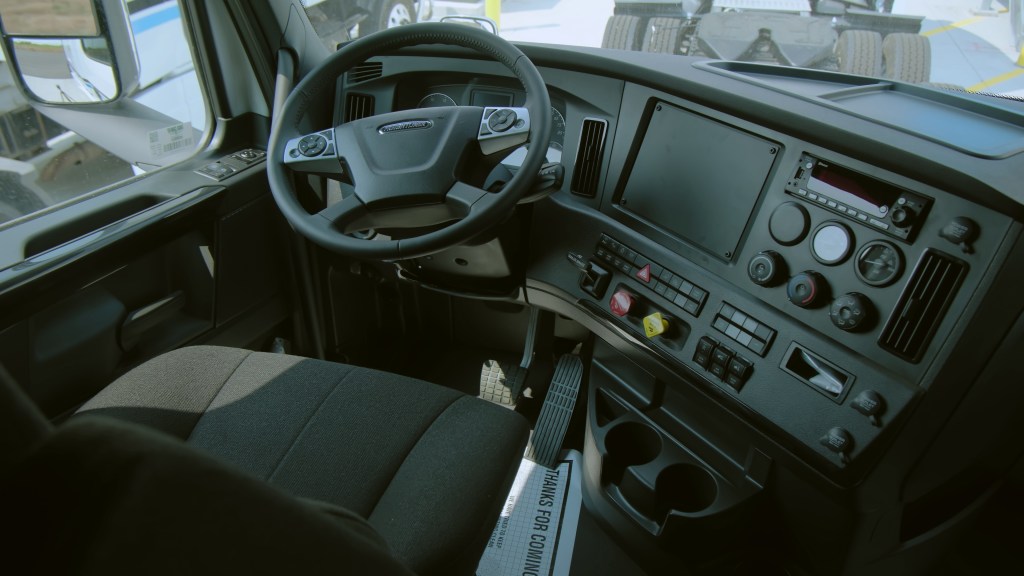
California just rewrote the rules for autonomous trucking — and the Class 8 industry is about to feel the shift. In late April 2026, the California Department of Motor Vehicles finalized regulations that lift the longstanding ban on fully driverless operation of heavy vehicles above 10,001 lbs on public roads. For the first time, companies developing autonomous Class 8 trucks can apply for commercial deployment permits in the world’s fifth-largest economy, opening a freight corridor that handles an estimated 800 billion ton-miles of cargo annually. Here is what the new framework requires, which companies are positioned to benefit, and what independent dispatchers and fleet operators should be tracking.
What California’s New Heavy-Duty AV Rules Actually Require
The previous California AV regulatory framework, administered by the DMV under Vehicle Code Section 38750, explicitly prohibited autonomous operation of vehicles exceeding 10,001 lbs gross vehicle weight. That prohibition is now gone. The updated rulemaking, published by the California DMV, establishes a tiered permitting process for heavy-duty AVs that includes several significant requirements distinguishing commercial trucks from the lighter robotaxi framework already in place for companies like Waymo.
The most consequential requirement is the 500,000-mile minimum validated testing threshold for any Class 7 or Class 8 vehicle seeking a driverless deployment permit. This is a substantially higher bar than the lighter vehicle framework and reflects both the longer stopping distances and increased collision severity associated with 80,000-lb trucks. Additionally, companies must submit real-time incident data to the DMV and maintain a remote monitoring operator on duty during all driverless runs on California highways. According to FreightWaves, the regulations also require a minimum $5 million insurance bond per vehicle operating under a driverless permit — a significant capital commitment for early-stage operators.
Aurora, Kodiak, and Plus.ai: Who Is Ready and Who Is Watching
Aurora Innovation is the furthest along commercially. The company launched commercial driverless operations in Texas in April 2024, operating between Dallas and Houston with no safety driver aboard. Aurora’s Driver system has accumulated well over 500,000 miles of autonomous operation — though a portion of that is on Texas routes, not California highways, which the DMV may count separately in its permit evaluation. Aurora has publicly confirmed it is pursuing a California commercial permit and expects to file a full application in Q3 2026, per CCJ Digital.
Kodiak Robotics is also well-positioned. Kodiak has operated autonomous trucks in Texas, Oklahoma, and Georgia under USDOT exemptions and has an active partnership with US Xpress (now a Werner subsidiary). Kodiak’s total accumulated mileage is estimated at 300,000–400,000 autonomous miles as of Q1 2026, putting it within reach of California’s 500,000-mile threshold by late 2026. Plus.ai, which focuses on a supervised autonomy model using its SuperDrive co-pilot system, is pursuing a different path — its trucks carry a safety driver but can operate in full self-driving mode on approved highway segments. Plus.ai’s model may qualify under a separate California pilot permit category that has fewer mileage requirements, according to Transport Topics.
“The finalization of California’s heavy-duty AV regulations represents the most significant regulatory shift in autonomous trucking since federal exemptions began. The I-5 corridor alone moves freight volume equivalent to several major railroad lines — this opens a market that Texas alone cannot replicate.”
FreightWaves — California Heavy-Duty AV Regulations (May 2026)
What This Means for Independent Dispatchers and Fleet Operators
The practical impact on independent dispatchers over the next 12–18 months is modest but directional. Commercial AV deployment at scale on California lanes requires permit approval, fleet buildout, and shipper adoption — none of which happen overnight. The more immediate effect is on lane pricing. As major carriers signal AV deployment timelines, spot rates on high-volume California lanes (I-5 Los Angeles–Sacramento, I-10 Los Angeles–Phoenix, I-80 Sacramento–Reno) may face downward pressure as shippers anticipate future capacity additions. Dispatchers managing loads on these lanes should monitor rate trends on DAT and Truckstop.com closely through Q3 and Q4.
- Monitor AV permit announcements from the California DMV: The DMV is required to publish permit applications and approvals on its public AV portal at dmv.ca.gov. When Aurora or Kodiak file their California applications, it will be publicly visible there.
- Track lane rate trends on high-AV-exposure corridors: California I-5 and I-10 are the primary targets. Use DAT’s historical rate tool to establish a baseline for dry van and reefer rates on these lanes now, so you have a comparison point when AV capacity eventually enters the market.
- Assess your carrier mix exposure: If your book of business relies heavily on carriers operating California highway lanes, understand their AV adoption plans. Larger carriers partnering with Aurora or Plus.ai will have capacity and cost dynamics that differ from owner-operators as AV miles scale up.
- Stay current on FMCSA federal exemption activity: California permits govern state roads. Federal AV exemptions from FMCSA govern interstate operations. Watch the FMCSA exemption docket at fmcsa.dot.gov for Aurora, Kodiak, and Plus.ai filings that could affect multi-state corridors.

Looking Ahead: Q3 2026 and the First California Permit Decision
The California DMV has indicated it will begin accepting heavy-duty AV deployment permit applications in Q2 2026, with first permit decisions expected in Q3. Aurora’s application filing is the most widely anticipated event in the AV trucking calendar for the remainder of the year. A permit grant would mark the first time an autonomous Class 8 truck operates commercially without a human safety driver in California — a milestone that would accelerate regulatory momentum in other large freight states including Illinois, Ohio, and Washington. For the broader dispatch industry, the question is no longer if autonomous Class 8 trucks will operate at scale on U.S. highways but when — and California’s new regulatory framework just moved that timeline meaningfully forward.