




A big rig left Houston in the middle of the night with nobody inside, and by morning it had delivered a paying customer’s freight near Dallas — no driver, no backup operator, and nobody steering remotely. Bot Auto’s run is being called America’s first fully humanless commercial truckload, and the distinction matters: this was not a demo, not a pilot, and not a truck babysat from a control room. It was a real, paid load booked through a real logistics provider. For an industry that has watched autonomous trucking inch forward for a decade, this is the moment the technology stopped being a promise and started being a delivery. Here is exactly what happened, the company behind it, and what it does — and doesn’t — mean for the carriers and dispatchers reading this.
What Actually Happened on I-45
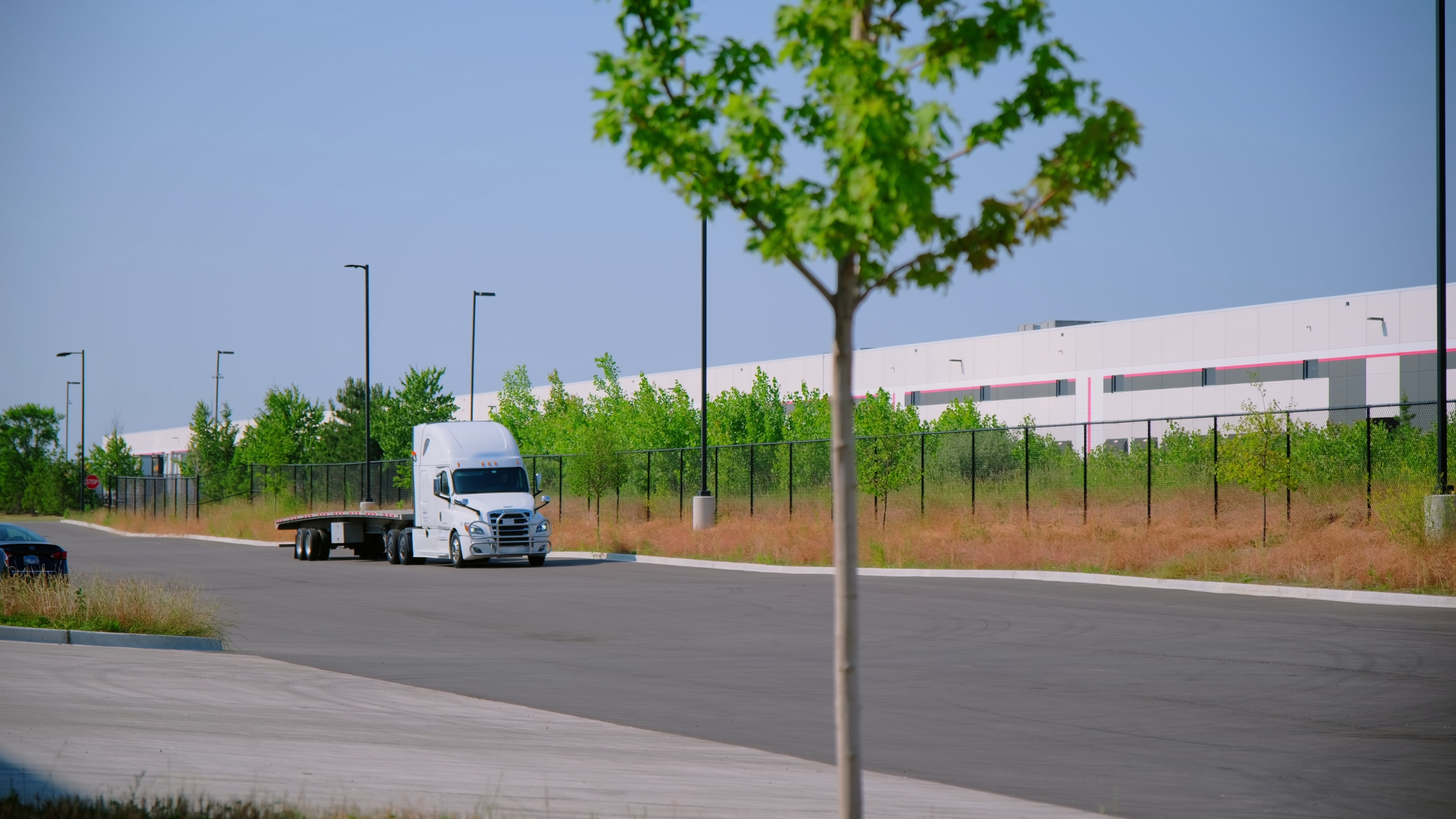
The numbers are concrete. The truck ran 230 miles from northeast Houston to Hutchins, just south of Dallas, traveling overnight on Interstate 45 — one of the busiest freight corridors in the country — and navigated stop lights, frontage roads, and side streets to reach a customer’s loading dock, according to FreightWaves. What set it apart from years of earlier autonomous demonstrations is what was not in or near the truck: no safety driver in the seat, no backup operator, and — critically — no low-latency remote human feedback steering it from afar. The official company announcement, distributed via PRNewswire, framed it as a genuine commercial operation rather than a staged event. Fox News described the truck leaving in the middle of the night with nobody inside and completing the run on schedule. This was freight moving through a real customer network, billed like any other load.
The Company Behind the Milestone
Bot Auto is not a legacy giant — it is a lean Houston startup, and its profile is part of the story. Founded in 2023, the company reached commercial humanless operation in less than three years with about 80 employees, a fleet of 12 tractors, more than 25 contracted customers, and roughly $40 million in capital raised, according to coverage from Transport Topics. Those are striking figures next to the autonomous-trucking programs that have burned through hundreds of millions and years of runway to reach similar milestones. The load itself was booked through logistics provider Ryan Transportation, and Bot Auto is partnering with Ryan to launch scheduled, fully driverless overnight freight runs between Houston and Dallas, as FreightWaves reported. The pitch to shippers is straightforward: overnight roughly 200-mile lanes that move while human drivers would be parked for their federally mandated rest, turning the hours-of-service clock from a constraint into a non-factor.
The 230-mile run between Houston and Dallas was not a pilot or demonstration — it was a paid commercial delivery made directly to a customer’s loading dock, without a safety driver and without low-latency remote human feedback.
FreightWaves, on Bot Auto’s humanless run
Why the Business Model Targets Overnight Regional Lanes
The choice of an overnight, fixed, roughly 200-mile lane is not incidental — it is the whole economic thesis of autonomous freight in its first commercial phase. A driverless truck has no hours-of-service limit, no need for sleep, and no detention fatigue, so the highest-value work is precisely the overnight regional shuttle that a human operation handles least efficiently: a driver running a 230-mile lane burns a chunk of their clock on a trip too short to justify a full day. Run that same lane driverless and overnight, and the truck simply moves freight in the window when human capacity is parked. That is why these deployments cluster on defined, repeatable corridors rather than open-ended long-haul — a fixed lane can be mapped, validated, and permitted, and the overnight timing maximizes the labor-cost advantage. It is the same logic driving the broader autonomous build-out across Texas, where regulatory changes now permit driverless heavy trucks on public roads once proper permitting is secured.
What It Means — and Doesn’t Mean — for Working Carriers
It is easy to read a humanless-truck headline as an existential threat to owner-operators, but the honest near-term picture is narrower. One startup with 12 tractors running a single overnight lane is a milestone, not a market; the autonomous fleet that exists today is a rounding error against the millions of trucks moving U.S. freight. What working carriers should actually take from this is directional. First, the technology has crossed the commercial threshold, which means the question is no longer “if” but “which lanes and how fast.” Second, the first lanes to be automated are exactly the predictable, fixed, overnight regional shuttles — not the messy, variable, multi-stop, customer-relationship freight that independents and small fleets excel at. Third, autonomous capacity entering specific corridors could pressure rates on those exact lanes over time, which is a reason to watch where deployments land rather than to panic. The defensible ground for human carriers — complex, relationship-driven, variable freight — is precisely the freight these systems are least ready to touch.
What to Watch Next
- Track the scaling, not the stunt. The number that matters is how many trucks and lanes Bot Auto and peers run a year from now, not the first delivery.
- Watch the Houston–Dallas corridor. Scheduled overnight driverless service with Ryan Transportation is the real test of repeatable commercial operation.
- Map your exposure to fixed regional lanes. If your carriers live on predictable overnight shuttles, those are the first lanes autonomy targets.
- Lean into variable, relationship freight. Multi-stop, white-glove, and customer-specific work is the human carrier’s durable advantage.
- Follow the permitting and regulation. Driverless operation hinges on state permitting and the evolving federal framework — the rules will shape the rollout pace.

The Real Significance
Bot Auto’s humanless run is a genuine inflection point, but its meaning is about trajectory, not immediate displacement. A three-year-old startup with a dozen trucks proved that driverless commercial freight can move on a busy interstate to a paying customer — which guarantees more capital, more lanes, and faster scaling across the predictable overnight regional corridors that autonomy targets first. For working carriers and dispatchers, the right response is neither panic nor dismissal: it is attention. Watch which lanes go driverless, double down on the variable and relationship-driven freight that machines can’t yet handle, and treat the autonomous build-out as a slow-moving shift in where capacity comes from rather than an overnight threat. The truck that drove itself to Dallas didn’t end human trucking — it redrew the map of which freight stays human, and for how long.


