
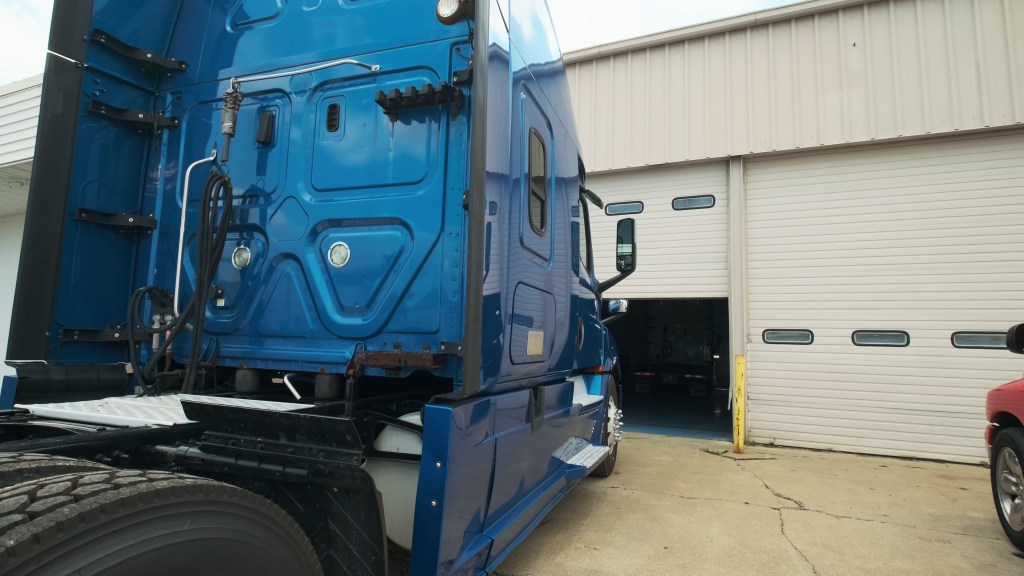
A cooling system service costs $250 to $400 — the engine damage it prevents costs $8,000 to $15,000, and August is exactly when a neglected radiator decides which bill you are going to pay. Summer heat is the ultimate stress test for a Class 8 cooling system, and overheating remains one of the most common and most preventable causes of a mid-lane breakdown. For dispatchers and owner-operators, a coolant failure is not just a repair invoice; it is a stranded truck, a blown appointment, and a recovery bill that can top $3,000 on its own. This playbook lays out the intervals, the costs, and the pre-August checklist that keeps your revenue unit rolling.
Know Your Coolant and Its Flush Interval
Not all coolant is on the same clock. Conventional green coolant needs a full flush every 300,000 miles or three years, whichever comes first, while Extended Life Coolant (ELC) formulations like Fleetguard ES Compleat or Shell Rotella ELC can stretch to 500,000 miles or six years between flushes. Whatever you run, the mistake to avoid is mixing chemistries or topping off with the wrong coolant — that is how you convert a maintenance item into a corrosion problem. Know which coolant is in the truck, and stick to its service interval.
What the Repairs Actually Cost
The economics make prevention an easy call. A complete cooling system service — flush, thermostat, pressure cap, and inspection — runs $250 to $400 depending on shop rates and coolant. A radiator repair or replacement climbs from about $500 for minor work to over $3,500 for a full replacement. Let the system go and the bill escalates fast: neglected coolant leads to liner pitting, water pump failure, and radiator corrosion that can cause $8,000 to $15,000 in engine damage. Add a roadside recovery that can exceed $3,000 per event, and the case for a proactive flush writes itself.
Cooling system failures are highly preventable with disciplined maintenance, yet they remain one of the most common causes of summer truck breakdowns.
Heavy Duty Trucking, summer cooling system guidance
Your Pre-August Cooling Checklist
Run this before the next heat wave. Most of it is inspection, not repair, and it catches the failures that strand trucks:
- Pressure-wash the radiator from the engine side: Push bugs and debris out through the fins rather than compacting them deeper — a clogged core cannot shed heat.
- Check coolant level and condition: Look for the right concentration and any sign of oil contamination or rust; test SCA levels on conventional coolant.
- Inspect every hose and belt: Squeeze hoses for soft spots and check belts for glazing or cracks — both fail under sustained summer load.
- Verify the fan and fan clutch engage: A fan that will not lock up at temperature is a slow-motion overheat waiting for a grade.
- Watch for the warning signs: A temp gauge climbing higher than normal or bright-colored puddles under the truck mean a leak — address it before the next dispatch, not after.
As heavy-duty maintenance guides stress, the cooling system is a whole-system problem: radiator, thermostat, water pump, hoses, cap, and fan all have to work together. Skipping one line item is how a $30 hose becomes a $12,000 engine.

Build It Into Your PM Schedule
Do not treat the cooling system as a once-a-summer afterthought. Fold coolant condition checks into every PM-A service, schedule the flush at the correct mileage for your coolant type, and log it so you know exactly when the next one is due. With diesel over $5 a gallon and rates softening, an unplanned engine failure is the kind of hit a small operation may not recover from. Spend the $250 to $400 before August peaks — it is the cheapest insurance policy in your maintenance budget, and it keeps the truck earning through the hottest weeks of the year.