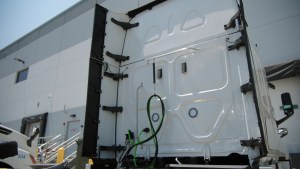
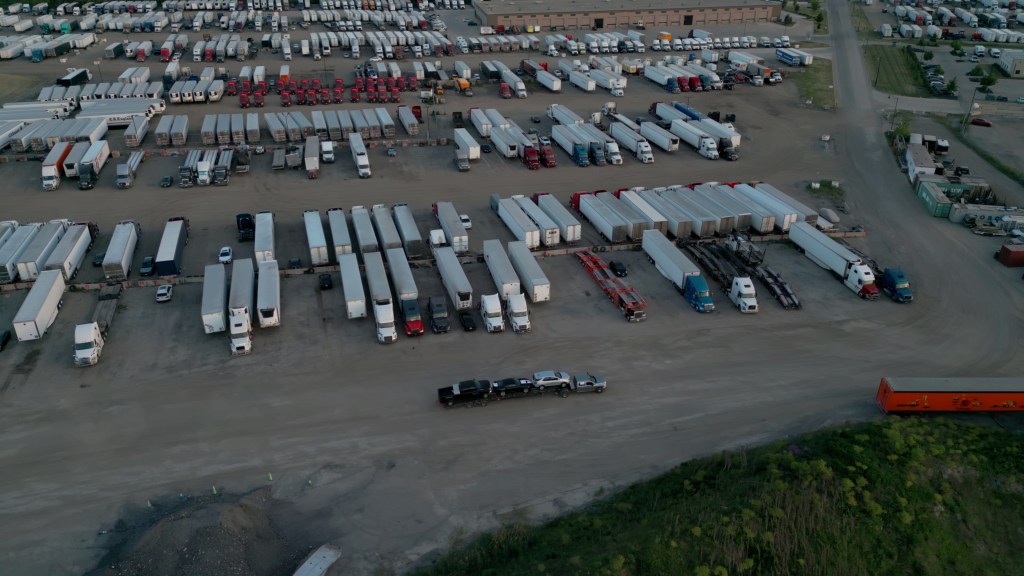
The most dangerous cargo thief in 2026 doesn’t cut a lock or break a fence — he backs up to your shipper’s dock in a clean truck, hands over paperwork that looks perfect, and drives away with the load while everyone waves goodbye. That is a fictitious pickup, and it is the fastest-growing scam in freight. Deceptive-pickup schemes climbed 31% in the first quarter of 2026, and for an independent dispatcher, the load that vanishes this way is the hardest to recover because you authorized it yourself. This playbook breaks down how the scam works and the exact verification steps that stop it at the dock.
How a Fictitious Pickup Actually Works
The mechanics are social engineering, not force. A criminal harvests a legitimate motor carrier’s identity — its MC number, DOT number, and often a spoofed version of its real phone and email — then books or intercepts a load under that stolen identity. A driver arrives at the shipper with convincing paperwork matching the booking, the dock crew sees documents that line up, and the freight leaves. The loss doesn’t surface for days, when the delivery never happens and the real carrier has no idea its authority was used. Because the paperwork “matched,” the theft is invisible at the moment it occurs.
The scale is staggering. Verisk CargoNet estimated cargo-theft losses exceeded $359 million in the first half of 2026 alone, with the average stolen shipment now worth roughly $341,518. That follows a 2025 in which losses surged about 60% to an estimated $725 million. Electronics, pharmaceuticals, food and beverage, and luxury goods are the top targets.

The Verification Checklist That Stops It
You cannot spot a fictitious pickup by looking at the paperwork — the paperwork is the trap. You stop it by verifying identity through independent channels before and at pickup. Run this checklist on every load, especially high-value freight:
- Call back on a number you sourced yourself: Look up the carrier’s phone number through the FMCSA SAFER system or a known directory — never the number on the emailed rate confirmation, which may be spoofed.
- Verify authority and match the entity: Confirm active MC/DOT authority, and check that the company you booked matches the company whose driver is arriving — a mismatch is the single biggest red flag.
- Confirm the driver and truck against the booking: Match the driver’s license, tractor number, and trailer number to what the booking party confirmed — if the dispatcher can’t tell you the driver’s name in advance, stop.
- Photograph everything at the dock: Capture the driver, license, tractor, trailer, and plates at pickup, and record seal numbers on the BOL to verify at delivery.
- Watch the behavioral tells: Sudden changes to pickup time or payment instructions, pressure to move a high-value load fast, or reluctance to enable real-time tracking are classic fictitious-pickup signals.
- Use dual approval on high-value releases: Require a second person to sign off before freight worth six figures leaves a dock — the cheapest insurance there is.
In 2026, criminals are placing greater emphasis on gaining access to motor-carrier accounts and misusing verified phone numbers — the identity is stolen long before the truck ever reaches the dock.
FleetOwner, on 2026 cargo-theft schemes
Why This Is Distinct From Double-Brokering
It is worth separating fictitious pickup from its cousin, double-brokering. In double-brokering, a real (if dishonest) carrier re-brokers your load to a third party; in a fictitious pickup, the entity at the dock is impersonating a legitimate carrier that has no idea its identity is being used. Both end with freight in the wrong hands, but the defense differs: double-brokering is fought at booking with carrier vetting, while fictitious pickup is fought at the dock with driver-and-truck verification. A complete anti-fraud program needs both, because thieves increasingly chain the tactics together so the freight is several transactions removed from the party you actually vetted.

Make Verification a Habit Before Peak Season
Cargo thieves target holiday weekends and the run-up to peak season precisely because docks are rushed and staffing is thin — CargoNet specifically warned that disruption windows amplify high-value theft risk. With fall volume building, now is the time to make the callback-and-verify routine automatic on every load, run a tabletop drill so your shippers’ dock crews know the red flags, and treat any booking that resists tracking or rushes a release as guilty until proven innocent. The load you save is the one a fake driver never gets to drive away with.