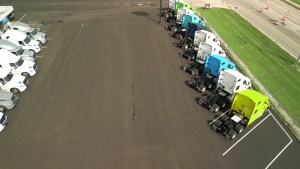

For the first time in U.S. history, a federal bill has laid out a concrete, commercially viable pathway for autonomous Class 8 trucks to operate on interstate highways — and in 2026, that bill has moved further through Congress than any AV legislation before it. The SELF DRIVE Act of 2026 (H.R. 7390), introduced February 5 by Reps. Bob Latta (R-OH) and Debbie Dingell (D-MI), is not a proposal for a pilot program or a theoretical framework. It is legislation that, if enacted, would fundamentally change who can deploy driverless freight trucks, on what routes, under what safety standards, and with what federal versus state oversight. Here is what independent carriers and dispatchers need to understand about what this bill actually does.
What the SELF DRIVE Act Actually Does
The Safely Ensuring Lives Future Deployment and Research in Vehicle Evolution (SELF DRIVE) Act of 2026 has four primary provisions that matter for the commercial trucking industry. The first is the revenue-generating permit provision: the bill gives the Secretary of Transportation explicit authority to allow AV manufacturers and fleets to engage in limited commercial operations while under a testing permit. For the first time, federal legislation defines a legal path for autonomous trucks to carry revenue freight as part of their evaluation process, not just operate empty on closed courses.
The second provision is state preemption: the bill preempts state-level restrictions on autonomous vehicle design and performance, creating a single federal standard rather than 50 separate state regulatory regimes. This has been the primary barrier to autonomous truck scaling — different rules in California, Texas, Arizona, and Florida meant that a commercially viable autonomous truck in one state might be illegal in the next. H.R. 7390 resolves that by placing AV safety standards exclusively under federal jurisdiction. As The Trucker reports, the bill was referred to both the House Energy and Commerce Committee and the House Foreign Affairs Committee for review.
The National Automated Vehicle Safety Data Repository
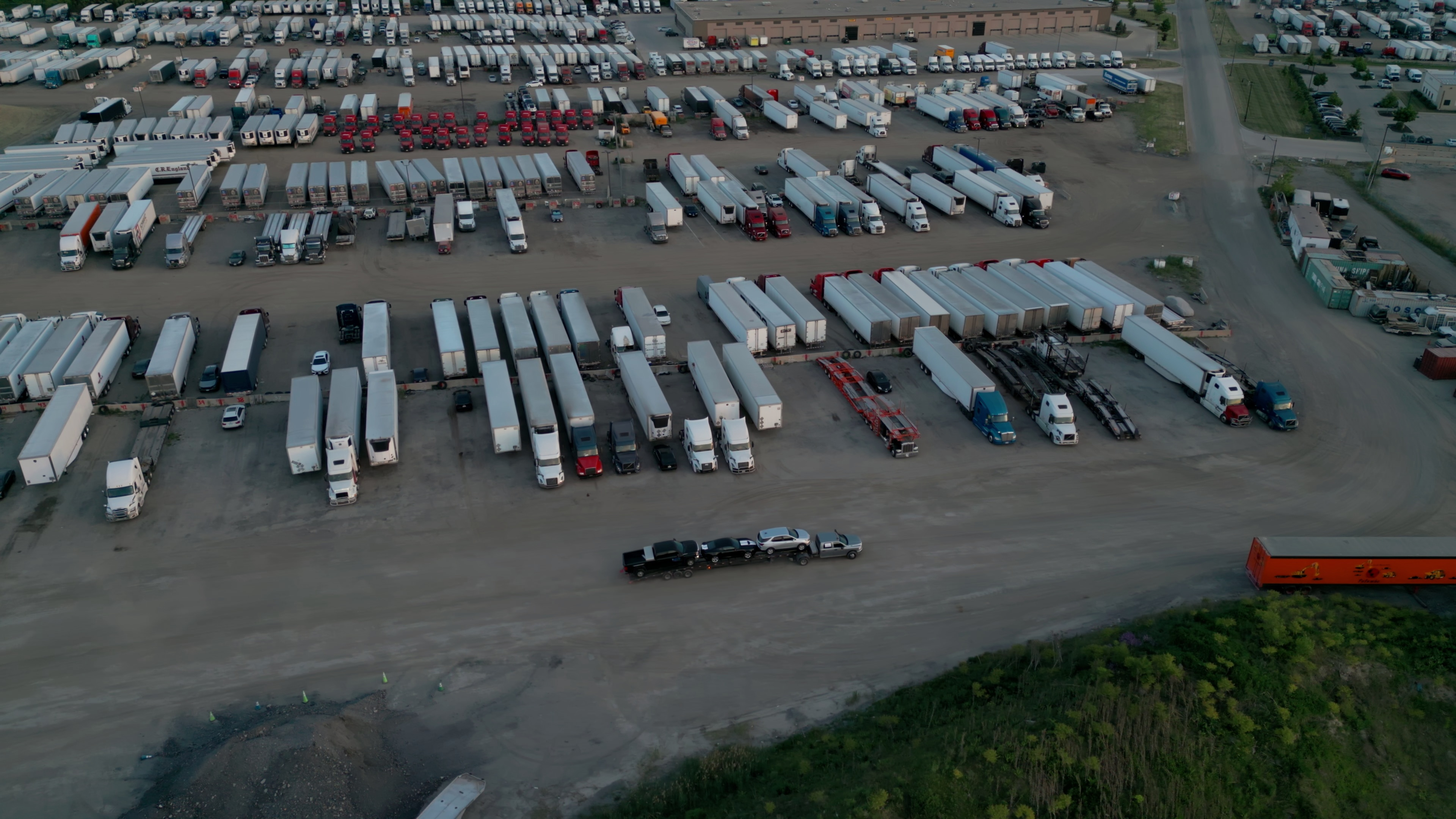
The third major provision establishes a National Automated Vehicle Safety Data Repository — a centralized federal database where crash data, near-miss incidents, and safety performance information from AV-equipped vehicles would be collected, stored, and made available to researchers, regulators, and the public. This replaces the NHTSA Standing General Order issued in 2021 that required manufacturers to self-report AV crashes, which many safety advocates criticized as inadequate and inconsistently enforced.
The repository provision is significant for independent carriers for a practical reason: it means the safety performance data from Aurora, Kodiak, Waabi, and other AV operators will eventually be publicly accessible. Carriers evaluating whether to transition drivers to AV-supervised roles, or whether autonomous trucks pose a competitive threat to their lanes, will have real data rather than manufacturer press releases to work with.
“The SELF DRIVE Act moves to dismantle regulatory roadblocks that have kept autonomous freight in a perpetual testing phase by allowing limited commercial operations while trucks are evaluated — and by preempting state-level restrictions, it provides the legal certainty required to move autonomous heavy trucks from closed tracks to interstate commerce.”
— FreightWaves, 2026 AV Bill: A Game Changer for Heavy Trucking
The Self-Certification Controversy and Industry Opposition
The most contested element of H.R. 7390 is its self-certification framework. The bill requires AV manufacturers to develop a “safety case” before commercial deployment, but — critically — does not require that the federal government verify these plans before or after deployment. This means an autonomous truck developer could self-certify compliance with the safety standard and begin commercial operations without NHTSA independently validating the safety case. According to IndexBox’s analysis of the bill’s opposition, safety advocates and some trucking industry groups argue that permitting 80,000-pound driverless trucks on interstate highways based on unverified manufacturer assertions is a dangerous regulatory gap.
Aurora, one of the bill’s strongest supporters, addressed this directly in a February 2026 post: “Driverless, Not Ruleless: Why 2026 Is the Year for Federal AV Standards.” The argument from AV developers is that a rigorous safety case — even one that is self-certified — is more transparent and standardized than the current patchwork of state-level approvals that have governed AV testing since 2018.
What H.R. 7390 Means for Independent Carriers and Dispatchers
For independent carriers and the dispatchers who serve them, the SELF DRIVE Act is not an immediate operational threat — it is a 5 to 10-year horizon event that requires strategic awareness now. The lanes most likely to see early autonomous commercial freight operations under H.R. 7390 are long-haul interstate corridors between major metros with low congestion and predictable road conditions: Dallas to Houston, Phoenix to Los Angeles, Atlanta to Jacksonville. These are also among the most competitive spot-market lanes for human-driven carriers. According to ACT News’s coverage of the bill, Congress formalizing an AV framework accelerates investment timelines by giving the industry legal certainty that previously did not exist.

What to Watch as H.R. 7390 Moves Through Congress
The bill is currently in committee review. The House Energy and Commerce Committee will focus on the safety and technology standards framework, while the Foreign Affairs Committee referral suggests congressional concern about foreign-owned AV entities accessing U.S. freight infrastructure — a theme consistent with the broader scrutiny of the Super Ego and chameleon carrier investigations that have occupied FMCSA’s attention in 2026. Watch for hearings this summer as the committee markup process begins. Independent carriers and dispatchers who want to shape this legislation should contact their House representative and submit public comment — the Congressional process for H.R. 7390 is still early enough that industry input matters.
- Monitor H.R. 7390’s status at congress.gov/bill/119th-congress/house-bill/7390 — committee markup hearings will be the next major milestone and will include public testimony from industry stakeholders.
- Identify your most competitive long-haul interstate lanes (250+ miles, low congestion, point-to-point routing) and model how autonomous competition on those lanes would affect your carrier network’s revenue in a 5-year horizon.
- Track the National AV Safety Data Repository development — when crash and near-miss data from AV operators becomes publicly available, it will provide the clearest real-world picture of where autonomous trucking is actually safe versus where it still has significant limitations.
- Follow FreightWaves and ACT News for committee hearing dates and markup language updates as H.R. 7390 progresses through the 119th Congress.
- Consider what AV-adjacent roles independent dispatchers might fill — early autonomous deployments like Aurora and Kodiak’s current operations still require human oversight coordinators, exception management, and customer service functions that independent dispatchers are well-positioned to provide.