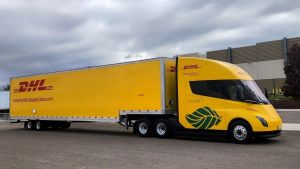

The hydrogen trucking sector showed up to ACT Expo 2026 in Las Vegas with something it has been missing for the past two years: a commercial deployment deal with actual numbers attached. Toyota Motor North America and Hyroad Energy announced on May 4, 2026 that the two companies have reached a definitive agreement to deploy 40 hydrogen fuel cell Class 8 trucks in Southern California, under a framework that combines Toyota’s fuel cell technology with Hyroad’s truck assets — assets that include 117 vehicles, spare parts, software platforms, and intellectual property acquired from Nikola Corporation’s bankruptcy auction in August 2025. Here is what the data shows and why the deal is more structurally significant than its 40-truck count suggests.
The Deal: What Was Announced at ACT Expo
According to the Toyota USA Newsroom announcement from May 4, 2026, Toyota and Hyroad will deploy 40 hydrogen fuel cell Class 8 trucks for Toyota’s own logistics operations in Southern California. The trucks will operate under a services contract in which Hyroad provides the vehicles, maintenance, data, and software platforms, and Toyota supplies hydrogen fuel through its own refueling infrastructure currently under development in Ontario, California. A Hyroad truck was on display at Toyota’s booth at the Las Vegas Convention Center through May 7. The announcement followed a broader Toyota hydrogen ecosystem update that included Class 8 truck deployments and plans for new fueling infrastructure, outlined in a separate April 29 Toyota press release.

The Performance Numbers: Range, Fill Time, and Emissions
The hydrogen fuel cell Class 8 trucks in the Toyota-Hyroad deployment carry performance specifications that directly address the two objections that have plagued battery electric Class 8 adoption: range and refuel time. According to the Truck News coverage of the announcement, the Hyroad trucks offer an approximate driving range of up to 500 miles between fill-ups and a refueling time of approximately 15–20 minutes — comparable to a diesel truck at a fuel stop. The only emission from a hydrogen fuel cell powertrain is water vapor. The trucks use Toyota’s second-generation hydrogen fuel cell modules, the same technology used in the Kenworth T680 FCEV program and refined through Toyota’s Mirai passenger vehicle platform over more than a decade.
For comparison: the Tesla Semi’s 500-mile range battery pack requires approximately 30–45 minutes at a Megacharger to add 70% range (roughly 350 miles of usable charge). The Freightliner eCascadia’s 155–230-mile range per charge suits regional haul but not long-distance truckload. Hydrogen’s competitive position for long-haul Class 8 — 500 miles of range plus 15-minute fills — is structurally superior to battery electric for over-the-road linehaul applications, if infrastructure can scale. The Ontario, California fueling station that Toyota is building to support this deployment is the key infrastructure data point to watch. Clean Trucking’s analysis of the deal notes that Toyota’s infrastructure investment is what separates this announcement from prior hydrogen deployments that collapsed under chicken-and-egg fueling infrastructure problems.
“Hyroad’s collaboration with Toyota is a featured element of Toyota Hydrogen Solutions’ presence at ACT Expo. The two companies are bringing together the interconnected pieces that a functioning hydrogen trucking ecosystem requires — vehicles, software, and fuel supply — under a single commercial framework.”
— Hyroad Energy Press Release, May 4, 2026
The Nikola Connection: What Hyroad Actually Bought
Hyroad’s asset base is not a startup’s blank-sheet engineering — it is a refined version of Nikola Corporation’s hydrogen Class 8 platform, acquired for pennies on the development dollar. In August 2025, Hyroad acquired 117 hydrogen fuel cell trucks, spare parts inventory, software platforms, and Nikola’s accumulated hydrogen trucking intellectual property through the bankruptcy auction. Hyroad subsequently launched comprehensive maintenance and support services for existing Nikola truck operators — creating a fleet management and service infrastructure before announcing the Toyota deployment. According to Electrek’s reporting on the deal, Hyroad is effectively the operational successor to Nikola’s hydrogen trucking program, stripped of the financial fraud and governance issues that destroyed the original company, and rebuilt with Toyota’s fuel cell technology and fuel infrastructure capital behind it.
What This Means for Independent Carriers: The Timeline Read
For independent carriers watching the zero-emission Class 8 transition, the Toyota-Hyroad deal is not a near-term equipment decision — it is a market signal about the hydrogen timeline. The 40-truck Southern California deployment is a commercial validation run, not a mass market rollout. The critical question is whether the Ontario fueling station opens on schedule and whether Toyota announces additional fueling corridors in 2026 or 2027. If the infrastructure scales, hydrogen’s 500-mile range and 15-minute fill advantage makes it the more natural replacement for over-the-road diesel than battery electric in most long-haul applications. If the fueling infrastructure stalls — as it has in prior hydrogen trucking programs — battery electric, led by the Tesla Semi and Freightliner eCascadia, wins the long-haul transition by default.
- 500-mile range, 15–20 minute fill — performance parity with diesel for long-haul missions; advantage over battery electric for over-the-road linehaul.
- 40 trucks in SoCal, Q2-Q3 2026 — commercial validation deployment, not mass market rollout. Watch for Toyota fueling station commissioning date in Ontario, CA.
- Hyroad’s Nikola asset base — 117 acquired trucks, parts inventory, and IP means this deployment is not starting from zero; software and maintenance infrastructure already exists.
- Toyota fuel cell tech — second-generation modules with proven reliability from the Mirai and Kenworth FCEV programs; not first-generation prototype technology.
- Key watch date: end of 2026 — whether Toyota announces fueling expansion beyond Ontario, CA will be the definitive signal on whether hydrogen scales or stalls again.

The ACT Expo 2026 Hydrogen Picture: Industry Regroups After Nikola
ACT Expo 2026 was notable for what the hydrogen sector didn’t bring — vaporware announcements and pre-order counts that don’t convert. According to Clean Trucking’s ACT Expo hydrogen roundup, the 2026 show felt more like a rebuilding moment than a hype cycle: companies with actual deployments and actual fueling infrastructure were the story, and companies with only PowerPoint trucks were not. The Toyota-Hyroad deal fits the former category. Trimac’s Hyundai XCIENT hydrogen pilot, reported by Trucking Dive, is another. The hydrogen Class 8 market is not dead — it is in a post-Nikola rationalization phase that is producing deployments with real assets, real fueling infrastructure, and real operating data. For independent carriers, the next meaningful data point is the Ontario fueling station commissioning and whether Toyota announces corridor expansion toward Las Vegas or the Inland Empire — which would signal that the Southern California hydrogen freight network is building the scale that makes carrier adoption a rational decision, not just a sustainability statement.