Volvo Trucks North America used the first two weeks of May 2026 to stack four deployment announcements that, together, reframe how the company is building out the heavy-duty electric and autonomous lanes for the rest of the decade. The VNR Electric got a mechanical electric power take-off (ePTO), Caltrans deployed a multipurpose VNR Electric straight truck, the next-generation VNL Electric got a public preview, and Volvo’s autonomous partnership with Aurora added a new Dallas-Oklahoma City corridor on top of the existing Sun Belt build-out. The combined signal independent carriers should be reading: Volvo is not chasing the long-haul Tesla Semi headline race — it is locking down the regional-haul, drayage, vocational, and short-haul autonomous segments where the daily duty cycle and predictable charging windows actually fit the current battery and corridor reality.
VNR Electric ePTO: The Vocational Unlock
The VNR Electric got an arguably more important upgrade than another range bump on May 5: a mechanical electric power take-off. Volvo Trucks adds electric PTO to VNR Electric semi lineup — opening the platform to construction, waste collection, distribution, and other vocational uses that previously required a diesel PTO to run dump bodies, hydraulic lifts, refuse compactors, or auxiliary equipment off the engine. Volvo Trucks North America announced the ePTO expansion as part of the company’s commitment to broaden what electric trucks can do in heavy-duty North American applications. For independent dispatchers serving vocational fleets, this is the line that moves the electric VNR from a long-tail experiment into a real competitor for refuse, drayage, and distribution duty cycles where the truck returns to base nightly.
The Caltrans Deployment: A Real-World Multipurpose Validation
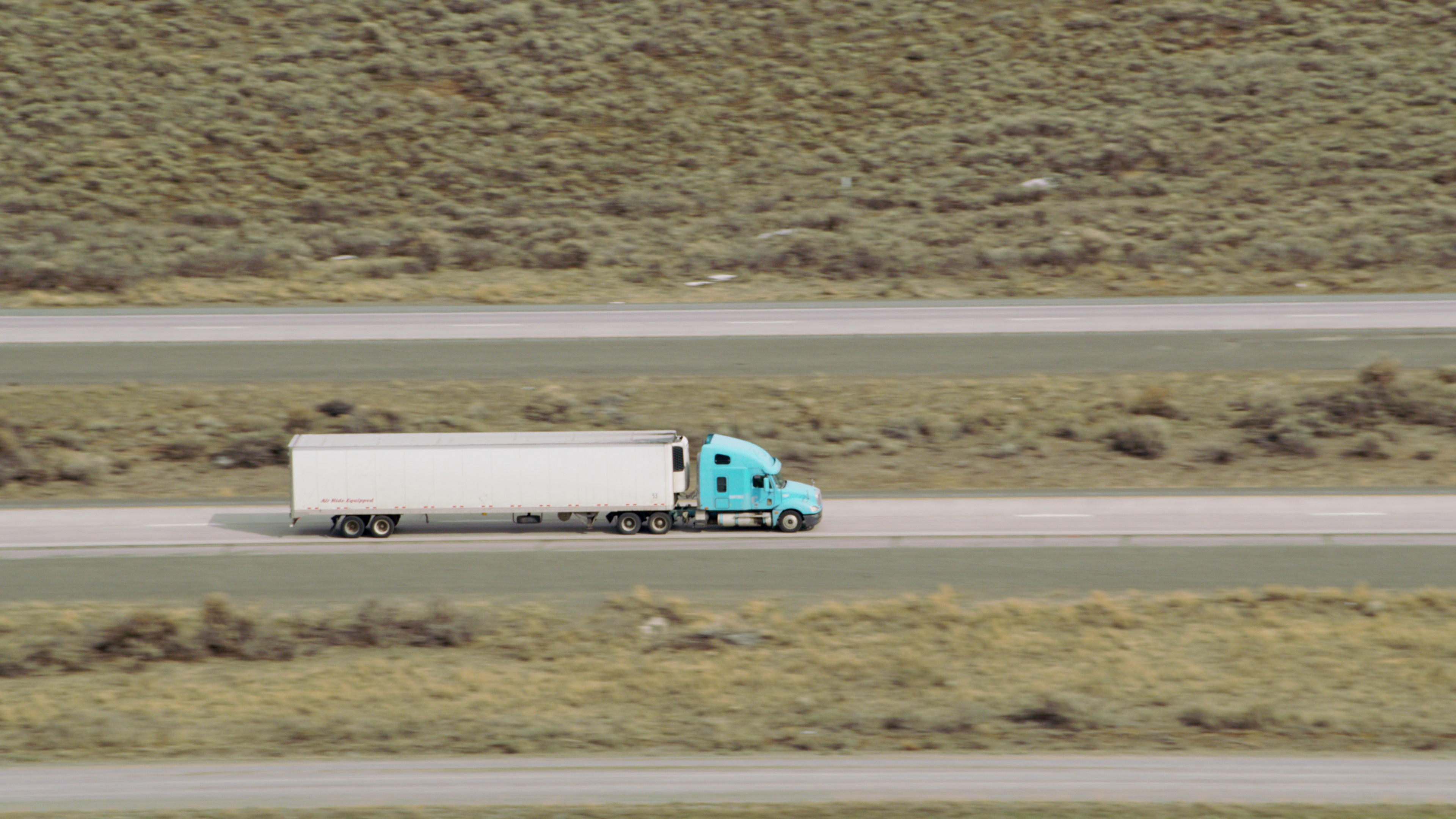
Caltrans — the California Department of Transportation — deployed a VNR Electric straight truck configured as a multi-purpose municipal vehicle with a 15-foot cargo body that can function as a flatbed with a liftgate or be used as a dump truck with a hydraulic lift. The Caltrans deployment is the first real-world validation of the ePTO build for a government fleet. Volvo’s broader corporate disclosure frames the Caltrans deployment as the proof point for the ePTO commercial pathway. For independent carriers reading the deployment tea leaves: government fleets are typically the first paying customer for new heavy-duty electric configurations because they have voucher-driven procurement and predictable depot charging — the VNR Electric with ePTO is now a configured product, not a one-off concept.
Volvo plans to build hundreds of Volvo VNL Autonomous trucks in 2027, with the Aurora-powered freight network now expanding to a new Dallas-Oklahoma City route on top of the existing Sun Belt corridors.
Auto Connected Car News — May 2026 Autonomous & Self-Driving Vehicle News
Next-Gen VNL Electric: The Regional-Haul Play
Volvo Trucks previewed the next-generation VNL Electric — a new battery-electric truck in development designed specifically for regional haul, drayage, and city distribution. This is a deliberate positioning. The VNL Electric is not chasing the 500-mile long-haul lane that Tesla Semi keeps showcasing. It is chasing the 200-300-mile regional-haul duty cycle where a single midday charge or a return-to-base night charge keeps the truck moving on real freight. For independent carriers running drayage out of Long Beach, Norfolk, or Houston, this is the configuration that probably enters viable lease economics first — the duty cycle fits, the charging infrastructure is already going in around the ports, and the residual-value question is less risky on a 200-mile-radius truck than on a long-haul.
Aurora Partnership: A Dallas-Oklahoma City Corridor On Top of Sun Belt
On the autonomous side, Volvo Autonomous Solutions and Aurora announced the expansion of their autonomous freight network with a new 200-mile route and a new autonomous freight route between Dallas and Oklahoma City. The new Dallas-OKC lane lands on top of the existing Dallas-Houston, Dallas-El Paso, and Fort Worth-Phoenix Aurora deployments, and it sits adjacent to the Bot Auto Houston-Dallas driverless lane and the Kodiak Dallas-Houston driverless lane covered in iDispatchHub last week. The Sun Belt is now the most autonomous-saturated freight corridor in the United States. For independent dispatchers building 12-month lane strategy, the read is straightforward: predict that the I-35 Dallas-OKC corridor sees structural lane-rate pressure inside the next 24 months as additional autonomous capacity stacks on, and price contract lanes accordingly.
The Independent Carrier Read on Volvo’s May 2026 Print
- The vocational ePTO unlock moves the VNR Electric from limited-application experiment to a real bid for refuse, drayage, and distribution depot duty cycles.
- The Caltrans deployment is a government-fleet proof point that opens the door for HVIP and similar voucher-driven state procurement programs to ramp.
- The next-gen VNL Electric targets regional haul, drayage, and city distribution — not long-haul. That is where the duty cycle, the corridor charging, and the residual-value math intersect.
- The new Aurora-Volvo Dallas-OKC lane stacks more autonomous capacity on the Sun Belt. The I-35 north-south corridor is now the densest autonomous-freight stretch in North America.
- Volvo plans to build hundreds of VNL Autonomous trucks in 2027. The production-volume number, not the route-launch headlines, is the figure independent carriers should be tracking for lane-rate impact in 2028.
- Watch the eMobility Voucher pricing for the VNR Electric ePTO configuration. State-level voucher math is what will determine first-customer economics for the next 18 months.

What to Watch Through Summer 2026 and Into 2027
The dates to mark on the calendar: a fall 2026 commercial-production confirmation on the VNR Electric ePTO variant, the next-gen VNL Electric formal launch (likely an ACT Expo or industry-event reveal), and Aurora’s next route-network expansion (which has been adding corridors at roughly one per quarter through 2025-2026). The Volvo-Aurora autonomous build-out, combined with Kodiak’s Roehl partnership and Bot Auto’s humanless commercial truckload, is now stacking real revenue lanes faster than most independent carriers are updating their 12-month strategy decks. The window to set rate strategy on lanes that will see autonomous competition is closing — the carriers who price contract freight against a 2027 autonomous reality, not a 2024 baseline, will be the ones still profitable when the production-volume numbers from May 2026 finally hit the highway.