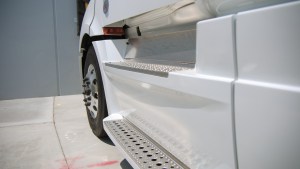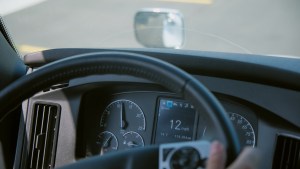

Bosch has begun delivering production-grade sensors and hardware components to Kodiak AI this week, marking a concrete transition from prototype testing to scaled manufacturing of autonomous trucking systems — and setting the stage for Kodiak’s planned driverless long-haul deployment in the second half of 2026. The announcement, confirmed by a joint release on April 30, 2026, comes as Kodiak’s SensorPod technology is on display at ACT Expo in Anaheim May 3–6, representing the first time the hardware stack developed jointly with Bosch has been shown in a production-representative configuration. For the independent trucking industry, the Kodiak/Bosch milestone is the clearest signal yet that autonomous Class 8 deployment is not a 2030 story — it is a 2026 story.
- Kodiak's SensorPod with Bosch hardware debuts at ACT Expo, showing production-representative sensor stack and thermal, placement, and weatherproofing design.
- The Atlas contract calls for 100 trucks in 2026, leveraging Kodiak's Permian Basin proof of concept and scale for fleet deployments.
- Kodiak targets long haul driverless service on public highways in H2 2026, a key test of commercial, high volume autonomous trucking.
From Prototype to Production: What the Bosch Partnership Means
The Kodiak-Bosch partnership was announced at CES in January 2026 and has moved faster than most autonomous trucking collaborations of its scale. According to the April 30 GlobeNewswire press release, Bosch has now begun supplying camera samples and hardware modules that Kodiak is actively testing and integrating into SensorPods — the proprietary hardware enclosures that house the full autonomous driving sensor suite. This is not a co-development announcement or a letter of intent. Bosch is delivering physical hardware, Kodiak is integrating it, and the companies have set their sights explicitly on high-volume production capability.
Trucking Dive’s coverage of the partnership milestone noted that the Bosch-Kodiak collaboration is designed to produce a scalable platform with integrated hardware, firmware, and software that can be deployed either on vehicle production lines or through third-party upfitters — which means the autonomous system is designed for mass-market installation, not bespoke engineering on a per-truck basis. This production architecture is a precondition for reaching the fleet-scale deployments that would make autonomous trucking economically meaningful for carriers and dispatchers.
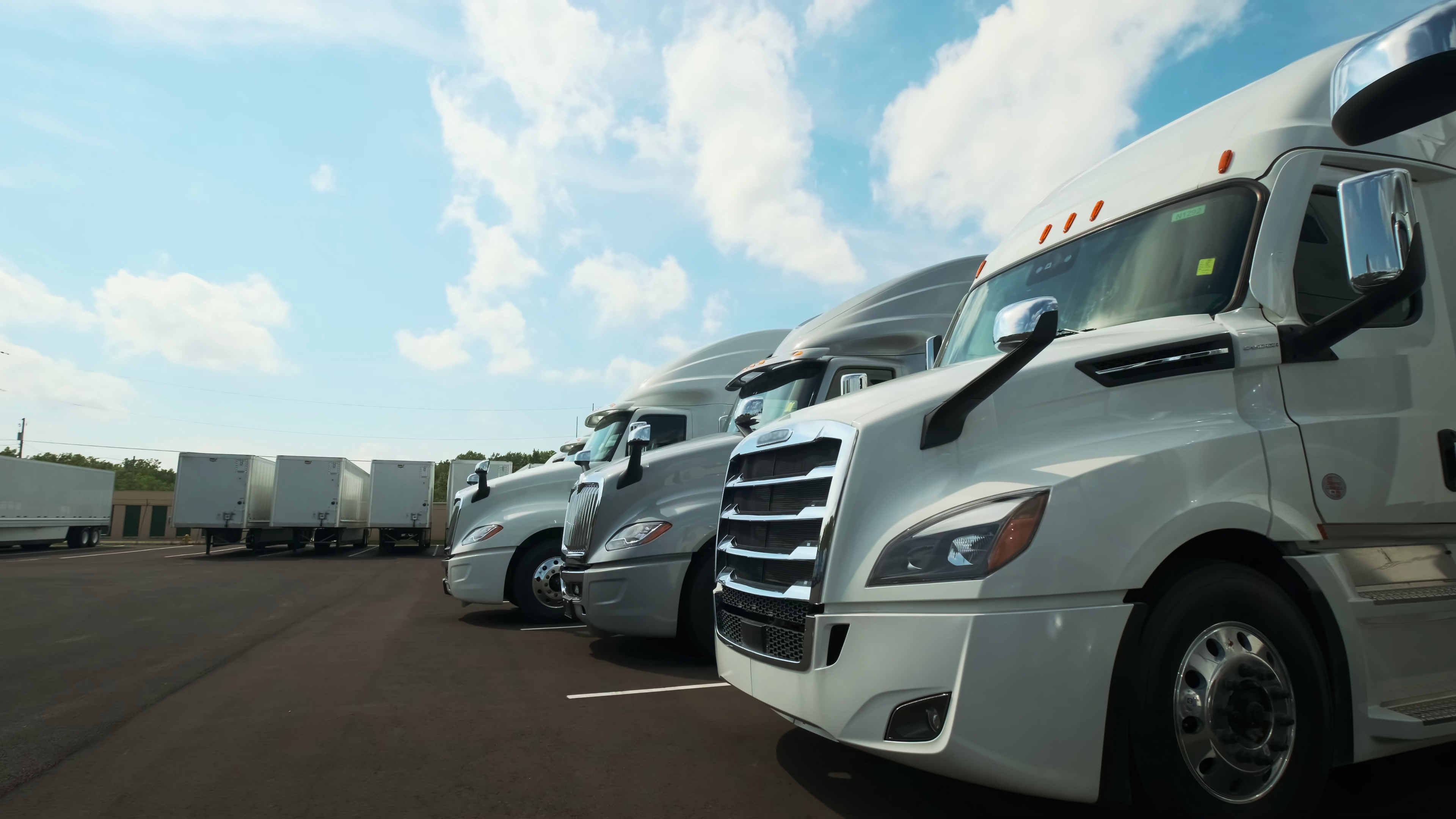
The ACT Expo SensorPod Display and What It Shows
ACT Expo — the Advanced Clean Transportation Expo running May 3–6 at the Anaheim Convention Center — is hosting Kodiak’s SensorPod display in the Bosch booth (#2153, West Hall). The SensorPod on display incorporates hardware samples developed jointly with Bosch and represents the production-representative configuration of the sensor stack that will go into the 100 trucks Kodiak is contracted to deliver to Atlas Energy Solutions. The ACT Expo display is the first public showing of this hardware in production-intent form, and industry analysts will be examining the thermal management design, the sensor placement geometry, and the weatherproofing architecture that Kodiak must demonstrate to support Texas Permian Basin operations.
Kodiak’s existing driverless operation in the Permian Basin — fully driverless, no safety driver in the cab — has accumulated more than 3 million autonomous miles and over 5,200 hours of paid driverless service through its Atlas Energy partnership as of late 2025, per Kodiak AI’s official reporting. The Permian Basin operation is the operational proof-of-concept for the broader 100-truck contract that Kodiak intends to fulfill in 2026.
“Since announcing our collaboration in January 2026, Bosch and Kodiak have moved quickly from strategic alignment to hands-on engineering execution, achieving key milestones in developing a production-grade, redundant autonomous platform designed to support high-volume deployment.”
— Bosch and Kodiak AI Joint Press Release, April 30, 2026
The Midwest Expansion and the H2 2026 Driverless Timeline
Concurrent with the Bosch hardware delivery announcement, Kodiak has expanded its autonomous trucking program into the Midwest, completing a demonstration operation in Ohio and Indiana in April 2026. Carnegie Mellon’s Safety21 program documented the Midwest expansion as Kodiak’s first operational demonstration beyond the Sun Belt corridor that has defined its commercial deployment to date. The significance for the broader industry is geographic: autonomous trucking that only works in flat, dry Sun Belt conditions serves a limited carrier segment. Midwest demonstration validates performance in more variable weather and road conditions.
Long-haul driverless service — fully unattended, over public highways between major freight markets — is targeted for H2 2026. Commercial Carrier Journal’s analysis of the Kodiak roadmap notes that the Atlas 100-truck contract and the long-haul driverless launch are the two near-term milestones that will define whether Kodiak’s 2026 commercial program validates the production-scale autonomous trucking thesis or reveals additional deployment barriers.
- Bosch has delivered initial hardware samples to Kodiak AI as of late April 2026, moving the partnership from announcement to active engineering execution. Camera integration into SensorPods is underway.
- The Kodiak SensorPod with Bosch hardware is on display at ACT Expo May 3–6 in the Bosch booth (#2153, West Hall), representing the first production-representative configuration of the autonomous sensor stack.
- Kodiak’s Atlas Energy 100-truck contract is targeted for 2026 fulfillment, building on 3 million+ driverless miles already accumulated in the Permian Basin driverless operation.
- Midwest operational demonstrations in Ohio and Indiana were completed in April 2026, expanding Kodiak’s geographic validation beyond the Sun Belt corridor.
- Long-haul driverless service on public highways is targeted for H2 2026, marking the transition from controlled-environment driverless operations to open-road commercial deployment.

What This Means for Independent Carriers and Dispatchers
The Kodiak/Bosch production hardware milestone does not immediately change the competitive landscape for independent owner-operators — the 100-truck Atlas contract is a specialized industrial use case in the Permian Basin, and long-haul driverless deployment at commercial scale is still months away from public highways. But the transition from prototype to production hardware is a structural marker that the autonomous trucking timeline has compressed. The dispatchers and carriers watching these developments most carefully are those running Sun Belt corridors where autonomous operations are most likely to reach commercial scale first: Texas to Atlanta, Dallas to Phoenix, Los Angeles to El Paso. The window to understand how autonomous trucking will affect load availability, carrier relationships, and rate structures on those lanes is narrowing. Independent dispatchers who are building their service model around adaptability — diversified lane coverage, multi-mode capability, strong carrier relationships across freight types — are positioning themselves ahead of the inflection point that Kodiak’s H2 2026 deployment will represent.