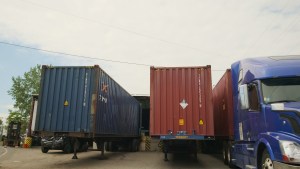

PACCAR’s new T280E, T380E, and T480E battery-electric Kenworth trucks represent the most significant expansion of the Class 6-8 electric lineup since the K270E launched in 2022, and this time the target customer is every fleet running local delivery, utility, regional haul, and vocational work in the sub-170-mile daily range. With 150 kWh and 225 kWh battery options, up to 170-mile range on the larger pack, 150 kW DC fast charging that delivers a full recharge in under 60 minutes, and peak motor output of 605 horsepower, the T-series BEVs enter 2026 production as the most capable conventional-cab electric Class 6-8 trucks available for order. Here is what the spec sheet actually means for independent carriers watching the EV market — and what the deployment math says about whether this technology is relevant to your operation yet.
What PACCAR Launched and What It Replaces in the Lineup
The T280E (Class 6), T380E (Class 7), and T480E (Class 8) are PACCAR’s first conventional-cab battery-electric heavy trucks. Unlike the earlier K270E and K370E, which used a cab-over-engine configuration optimized for urban delivery, the T-series uses the traditional conventional-cab format preferred by regional haul and vocational fleets. Kenworth’s official announcement confirms production has begun with orders open through Kenworth dealers in the US and Canada.
The powertrain uses PACCAR’s 150 kWh and 225 kWh battery packs paired to two direct-drive electric motors. ACT News’ full spec breakdown confirms motor ratings from 170 kW (230 hp continuous, 335 hp peak) up to 350 kW (470 hp continuous, 605 hp peak), with peak torque of 1,100 or 1,850 lb-ft depending on configuration. The 150 kW DC fast-charging system enables full recharge in approximately 60 minutes at a compatible DC fast charger — a meaningful spec improvement over the K270E’s earlier charging architecture.

The Deployment Math: Where the T-Series Makes Economic Sense
The 170-mile range on the 225 kWh pack is the number that defines the T-series customer profile. Heavy Duty Trucking’s market analysis of the K270E/K370E deployment data shows that fleets using electric trucks for routes under 150 miles per day with predictable return-to-base charging achieve the lowest total cost of ownership — typically 15-20% below diesel equivalents when utility rates are below $0.12 per kWh and when the fleet qualifies for state incentive programs.
At current California electricity rates (averaging $0.23/kWh for commercial accounts), the fuel cost per mile on the T480E runs approximately $0.18-$0.22 per mile on the 225 kWh pack, versus $0.93-$0.94 per mile for diesel at $5.64/gallon at 6 MPG. The T-series fuel cost advantage is $0.71-$0.76 per mile in California and similar high-cost-electricity states — on a 150-mile daily route that translates to $106-$114 per day in fuel savings per truck. At that rate, the premium price of an EV versus a comparable diesel pays back in approximately 5-7 years without incentives, and 2-3 years with California HVIP vouchers currently valued at up to $150,000 per Class 8 vehicle.
Charging Infrastructure: The Real Constraint for Independent Operators
The 60-minute fast-charge spec is compelling on paper, but the practical constraint for independent owner-operators and small fleets is access to 150 kW DC charging infrastructure away from a depot. Charged EVs’ reporting on the T-series launch notes that while PACCAR is promoting the fast-charge capability, the current public commercial DC fast-charging network covers fewer than 15% of the freight corridors where Class 6-8 trucks operate. End-of-shift and overnight AC charging at a home depot remains the primary charging model for the foreseeable future.
For independent owner-operators without a dedicated depot, the T-series is not a practical option today outside of California’s HVIP network and specific metropolitan markets with supported charging infrastructure. For small fleet operators running fixed local routes with return-to-base operations, the T480E is the most credible conventional-cab EV option currently in production.
“PACCAR’s T-series brings the conventional-cab electric format to Class 6-8 vocational and regional haul for the first time — the 60-minute fast charge and 170-mile range are the most practical EV specs we’ve seen at this weight class.”
— ACT News, PACCAR EV launch coverage, 2026
What Independent Carriers Should Track in the Coming 12 Months
The T-series launch adds to a 2026 electric truck market that now includes the Tesla Semi (822 kWh, 500-mile range, Class 8 long-haul), the Freightliner eCascadia (155-230 mile range, 6 million real-world miles logged), the Volvo VNR Electric (150 kWh, ePTO, municipal deployments), and the Toyota/Hyroad hydrogen fuel cell (500-mile range, 15-minute fill). Wallwork Trucks’ 2026 Kenworth model guide positions the T-series as PACCAR’s answer to the Freightliner eCascadia — a conventional-cab EV for fleets that need familiar cab ergonomics and the regional-haul range envelope.
- T480E range: 170 miles on the 225 kWh pack — practical for routes under 150 miles with return-to-base charging. Not a long-haul option at current battery density.
- Charging: 60 minutes at 150 kW DC fast charge — competitive with any Class 6-8 EV in production. End-of-shift AC charging remains the primary model for depot operations.
- Incentives: California HVIP up to $150,000 per Class 8 EV — the HVIP voucher program is the primary driver of small-fleet EV adoption. Without HVIP or equivalent state incentives, TCO parity with diesel requires 5-7 years.
- Infrastructure: fewer than 15% of freight corridors have 150 kW DC charging — the network constraint, not the truck spec, is the limiting factor for independent operators outside California and major metros.
- Watch PACCAR Q3 2026 production figures — the true deployment velocity will be visible in PACCAR’s 8-K filings. Orders-to-production lead times will indicate whether the T-series has traction beyond incentivized early adopters.

The 2026 EV Market in Context: What It All Means for Independent Operators
The T-series launch confirms that every major Class 6-8 OEM now has a production-intent battery-electric model in the conventional-cab format. The technology has crossed the threshold from pilot programs to real production — but the economic and infrastructure constraints that make EVs viable for depot-based local fleets continue to make them impractical for independent owner-operators running long-haul or unpredictable routes. The dispatchers and small carriers who should be watching the T-series, eCascadia, and VNR Electric most closely are those with local government or utility contracts, California-based fleet operations, and any operation that qualifies for HVIP or Clean Fleet Enterprise vouchers. For everyone else, the diesel market remains the operating environment, and the decision point for EV adoption is still 2-4 years away pending charging corridor build-out. PACCAR’s 2026 8-K filing will be the clearest early indicator of whether T-series production is tracking toward meaningful volume by year-end.