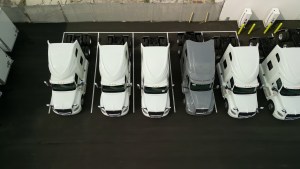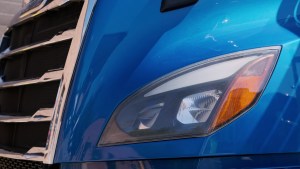

Volvo Trucks North America used ACT Expo 2026 to make the loudest electric-truck statement of the spring — a next-generation VNL Electric in development, a production-ready mechanical electric power take-off (ePTO) on the VNR Electric, and the disclosure that the existing 750-plus VNR Electric fleet has crossed 30 million zero-emission miles in North America and displaced an estimated 50,000 metric tons of CO2. The combined announcement signals that the path to broader Class 8 electrification is rotating from “does the truck run?” to “does the truck pencil for the work?” — a question every independent carrier watching the technology should now be able to answer with real data. The Volvo press release and the ACT News coverage from Long Beach this week land more concrete numbers than any prior Volvo Electric update.
The VNR Electric ePTO: 69.5 kW Without the Diesel Genset
The headline product is the new mechanical electric power take-off. Per Transport Topics, the ePTO inverts the VNR Electric’s traction-battery DC voltage into three-phase AC to drive an electric motor producing 69.5 kW of continuous power (just over 90 hp) and 271 Nm of torque, sufficient to run vocational tools, refrigeration units, hydraulic lifts, and aerial baskets directly off the truck without a parasitic diesel auxiliary engine. The first deployment is with the California Department of Transportation (Caltrans), which is taking a straight-truck VNR Electric configured as a multi-purpose municipal unit with a 15-foot composite cargo body that doubles as either a flatbed with liftgate or a hydraulic dump body.
For independent carriers, the ePTO matters because it removes the single biggest objection to electric Class 8 in vocational applications: you can’t run reefer or hydraulic lifts off a battery-electric tractor without burning diesel in the background. That objection just got answered. Refrigerated last-mile, construction-job-site delivery, municipal contracts, and aerial-work fleets are the immediate addressable market.

The Next-Generation VNL Electric: Daycab Only, Onyx Battery, Integrated e-Axle
The bigger structural news is the VNL Electric preview. Per the Volvo press release, the new VNL Electric will be the fourth vehicle on Volvo’s new platform — joining the redesigned VNL, the VNR, and a recently teased vocational model. The platform is engineered to support battery-electric, hydrogen fuel-cell, and internal-combustion variants without requiring a separate cab/chassis architecture, which is the cost-engineering bet that should drive volume on whichever powertrain reaches scale first.
Three design specifics matter most for buyers. First, daycab only — the truck targets regional haul, drayage, and city distribution rather than long-haul over-the-road. Second, the truck runs the Onyx Battery Platform from Proterra, with cells manufactured in South Carolina and packs engineered for demanding-cycle commercial use. Third, an integrated e-axle replaces the conventional driveline architecture and frees up packaging space for additional battery capacity — the simplest way to get more usable range out of the same overall length. FleetOwner’s analysis calls the platform decision “as Class 8 EV momentum slows” — framing this as Volvo doubling down on regional/vocational rather than the long-haul fight Tesla is waging.
“The Caltrans trucks join the more than 750 Volvo VNR Electric trucks currently in operation across the US and Canada, where they’ve collectively logged more than 30 million zero-emission miles and displaced an estimated 50,000 metric tons of CO2.”
Electrek, May 5, 2026
What Independent Carriers Should Read Into the Volvo Bet
- Regional and vocational is where Class 8 EV economics actually pencil today. Volvo is committing publicly that the next VNL Electric is daycab-only. Long-haul battery-electric remains a Tesla story; everything else has rotated.
- The ePTO opens vocational markets that were structurally locked to diesel. Aerial work, refrigerated last-mile, dump-body municipal, mobile workshop — each of these can now spec a battery-electric Class 8 without a parasitic genset.
- 30 million zero-emission miles is the largest real-world fleet dataset outside Tesla. The reliability, range-degradation, and charging-corridor data Volvo holds on those units is the most credible technical answer to the “will it actually work” question independent buyers are still asking.
- Onyx Battery is manufactured in South Carolina. Domestic battery supply matters for any federal procurement program with Buy America provisions and for fleet operators worried about supply-chain dependency on imports.
- The shared platform supports diesel, electric, and hydrogen on the same cab/chassis. Volvo is hedging powertrain risk at the engineering level instead of betting the company on one technology, which is the responsible answer for a manufacturer whose customers buy on 7–10 year ownership cycles.
The Independent-Carrier Decision: When to Pay Attention, When to Wait
For a one-truck owner-operator running long-haul over-the-road, none of this changes the calculus this year. The next VNL Electric is daycab and the math on a 500-mile daily run still favors diesel through 2027. For dispatchers running carriers on regional dedicated, drayage, or vocational lanes — especially in California, the Pacific Northwest, the Northeast, and major Texas metros where charging infrastructure is real — this announcement is the cleanest signal yet that the spec sheet to compare against diesel is now available. Per CCJ’s coverage, the truck is “available for order soon” — the open question is configuration, list price, and which charging-corridor incentive programs make the unit economic.

What to Watch Next
Three data points are worth tracking through Q3 2026. First, the published spec sheet on the next-generation VNL Electric — specifically usable range, kWh capacity, and DC fast-charge time. Second, the rate at which other OEMs (Daimler, Kenworth, Mack, International) respond with their own ePTO equivalents — that race is on. Third, whether the federal voucher programs and California HVIP funding extend to cover the new VNL Electric configuration when it opens for order. The Volvo announcement just reset the comparison shopping benchmark; the question for independent fleets is which combination of incentive, lane, and duty cycle moves first.